
EU.ACE in Zenica: Advancing Lifelong Learning and Micro-Credentials Across Europe
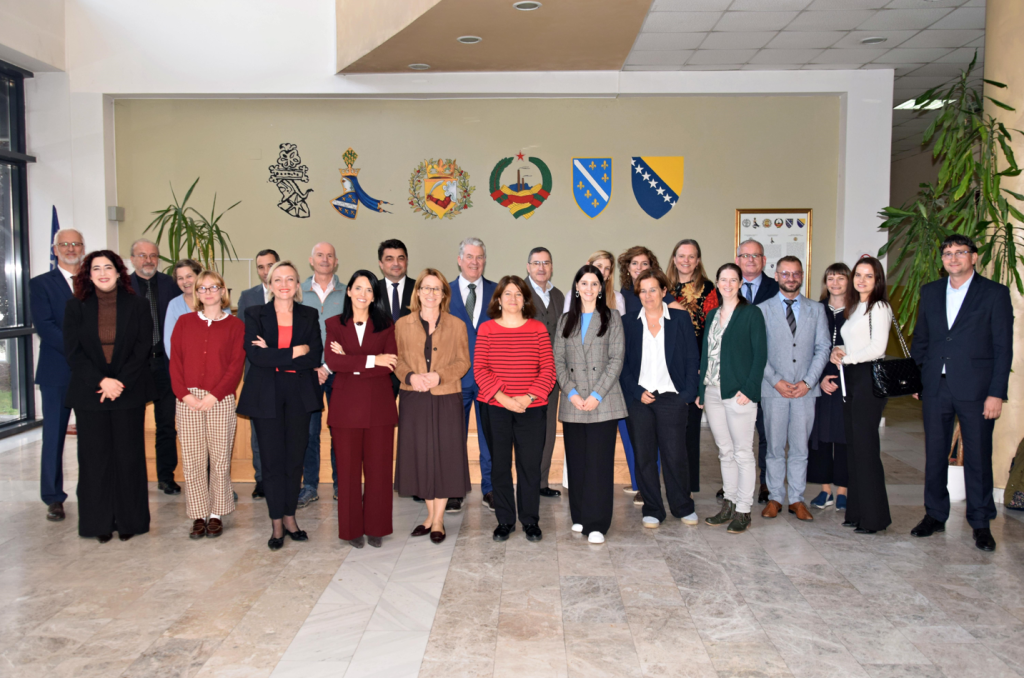
EU.ACE partners gathered at the University of Zenica, Bosnia and Herzegovina, from 12–16 October 2026 for a week of workshops, knowledge exchange and strategic discussions on University Lifelong Learning, micro-credentials and flexible learning pathways.
The University of Zenica hosted a week of activities organised by UNZE and delivered within the EU.ACE network, bringing together representatives from partner universities across Europe. The programme combined practical workshops for higher education representatives in Bosnia and Herzegovina with opportunities for institutional exchange, research networking and discussions on the future development of EU.ACE.
Sharing European practices in lifelong learning
The workshops explored how universities can develop coherent, modular and stackable micro-credentials as part of more flexible continuing education provision. Participants exchanged experiences on the design of micro-credentials, the use of ECTS and the development of learning pathways that respond to the needs of learners, professionals and changing labour markets.
Further sessions addressed the relationship between University Lifelong Learning and practice-oriented research, drawing on the experiences of partner institutions. The programme also examined Recognition of Prior Learning (RPL), with insights into the French approach presented by the Conservatoire national des arts et métiers (Le Cnam), alongside perspectives on University Lifelong Learning and micro-credentials from Hungary, shared by Andrássy University Budapest.
By bringing together different national and institutional experiences, the workshops provided a space to discuss common challenges, identify promising practices and explore how approaches to lifelong learning can be adapted to different regulatory and institutional contexts.
Strengthening cooperation across the EU.ACE network
The EU.ACE Executive Board met in Zenica on 15 October to discuss the network’s future direction and opportunities to deepen cooperation. The discussion highlighted the importance of developing tangible joint activities, strengthening institutional engagement, expanding research and project collaboration, and exploring funding opportunities beyond the European Universities Initiative.
The Board reaffirmed its commitment to continuing and deepening cooperation, while identifying further work needed on the network’s future development, participation models and governance. The meeting also included a presentation of the EU.ACE digitalCAMPUS – Marketplace by the University of Alba Iulia, demonstrating progress towards a shared platform for educational cooperation. Further assessment of technical, security and cost considerations will inform the next steps.
Alongside the workshops and strategic discussions, the programme offered opportunities to build relationships between colleagues, explore institutional research capacities and strengthen connections between partner universities. EU.ACE also joined the University of Zenica in marking the university’s 26th anniversary.
Continuing the collaboration
The week in Zenica demonstrated the value of combining practical knowledge exchange with strategic dialogue. By sharing experiences in micro-credentials, recognition of prior learning and flexible learning pathways, EU.ACE partners continue to explore ways to make University Lifelong Learning more accessible, relevant and firmly embedded in higher education.
The collaboration will continue at the next EU.ACE Week, scheduled to take place in Madrid, Spain, from 10–14 May 2027.